Hotel-to-venue event shuttles, with driver
An event shuttle is a continuous link between hotels, the event venue and other points, with vehicles rotating through the day. BusEventi plans it on the event programme, not on a single time.
Sizing starts from how many people board each loop and how long each pass takes, not from the total number of guests.
Problems it solves
Peaks in demand
In the morning and in the evening everyone moves at once. A rotating service spreads out passes and avoids long waits.
Different hotels
When guests sleep in several properties, the loop serves several pick-up points in sequence.
A single point of contact
Times, vehicles and changes go through one contact, instead of being split between several suppliers.
Photos from the field
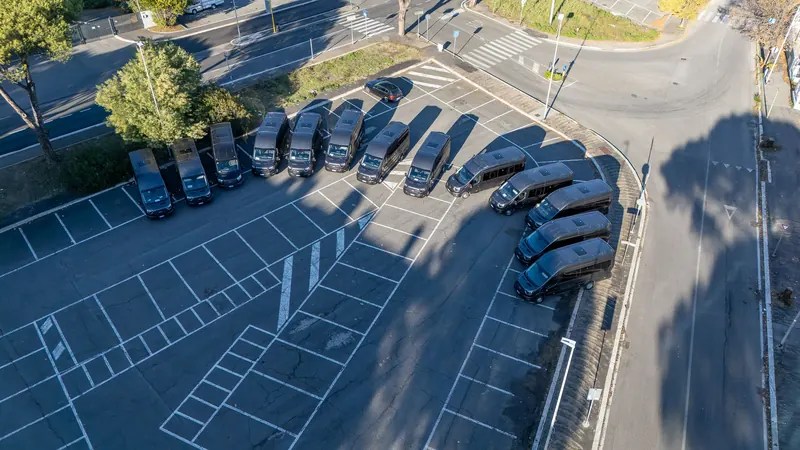
Car park · 13 minibuses seen from above 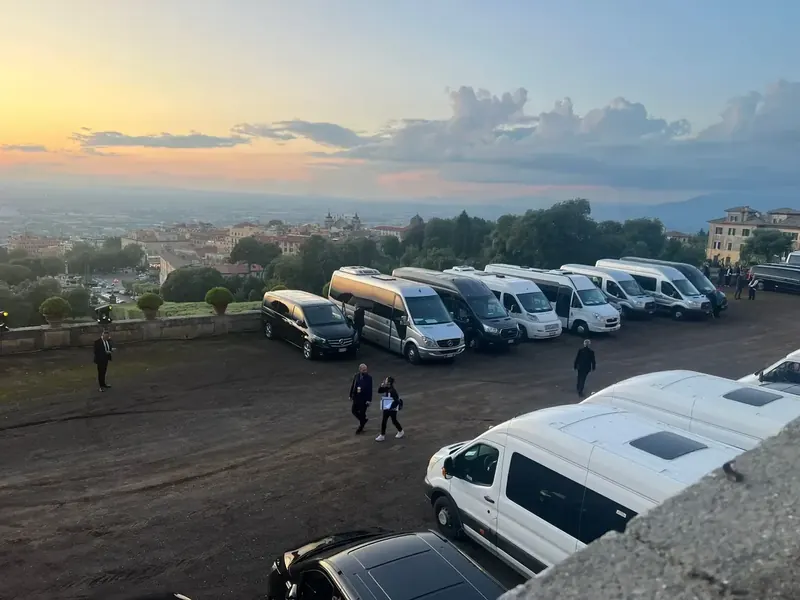
Terrace over the city · minibuses and vans · sunset 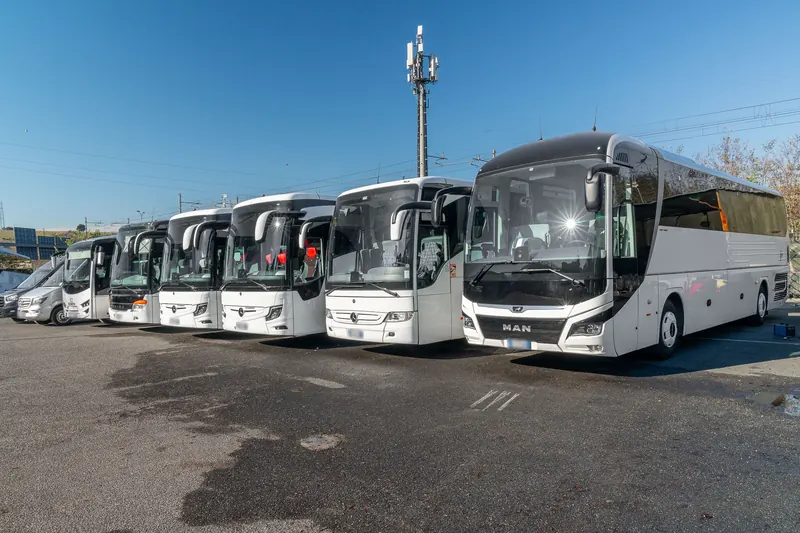
Yard · coaches and minibuses in a row
Photos of vehicles belonging to BusEventi's partner companies. The vehicle assigned to a service may differ from the one pictured.
A rotation plan, read like a timetable
A shuttle is not a single trip, it is a timetable. Below is a made-up example: two shuttles collect from three hotels in the morning, and in the evening the returns leave at different times.
| Time | Shuttle | Stop |
|---|---|---|
| Morning, to the venue | ||
| 07:30 | N1 | Hotel A · departure |
| 07:45 | N1 | Hotel B |
| 07:50 | N2 | Hotel A · departure |
| 08:00 | N1 | Hotel C |
| 08:05 | N2 | Hotel B |
| 08:20 | N1 | Event venue · arrival |
| 08:20 | N2 | Hotel C |
| 08:40 | N2 | Event venue · arrival |
| Evening, staggered returns | ||
| 17:30 | N1 | Venue, then Hotel A, B, C · departure |
| 19:00 | N2 | Venue, then Hotel A, B, C · departure |
| 22:30 | N1 | Venue, then Hotel A, B, C · departure |
Illustrative example. Times, hotels and number of shuttles are made up and only show the format. A real plan starts from your hotels, flights and event programme.
How it works
You send hotels, venue, days, entry times and guest numbers.
We work out the frequency of passes and number of vehicles and propose them with conditions.
Once details are confirmed, we plan loops, pick-up points and final times.
Frequently asked questions
What is the difference between a rotating shuttle and a single round trip?
A single round trip takes one group from A to B and back once. A rotating shuttle repeats the route continuously for several groups across the day. The second needs more passes and planned timings.
How is the number of vehicles for a shuttle calculated?
From how many people board each loop, the duration of each pass and the frequency required. There is no fixed number: we set it in the proposal after receiving the brief.
Do the shuttles have Wi-Fi or other equipment?
It depends on the assigned vehicle. Equipment such as Wi-Fi, sockets or a microphone must be confirmed for the planned vehicle in the proposal and is not guaranteed in advance.
Send us your brief
Event, dates and starting points are enough. Missing details are clarified in the proposal.